Mercedes-Benz design has always combined luxury, engineering and performance. Carbon fiber adds another dimension to that formula. Used correctly, carbon components can sharpen the exterior, create stronger visual contrast and give a Mercedes a more performance-focused appearance without replacing the character of the original car.
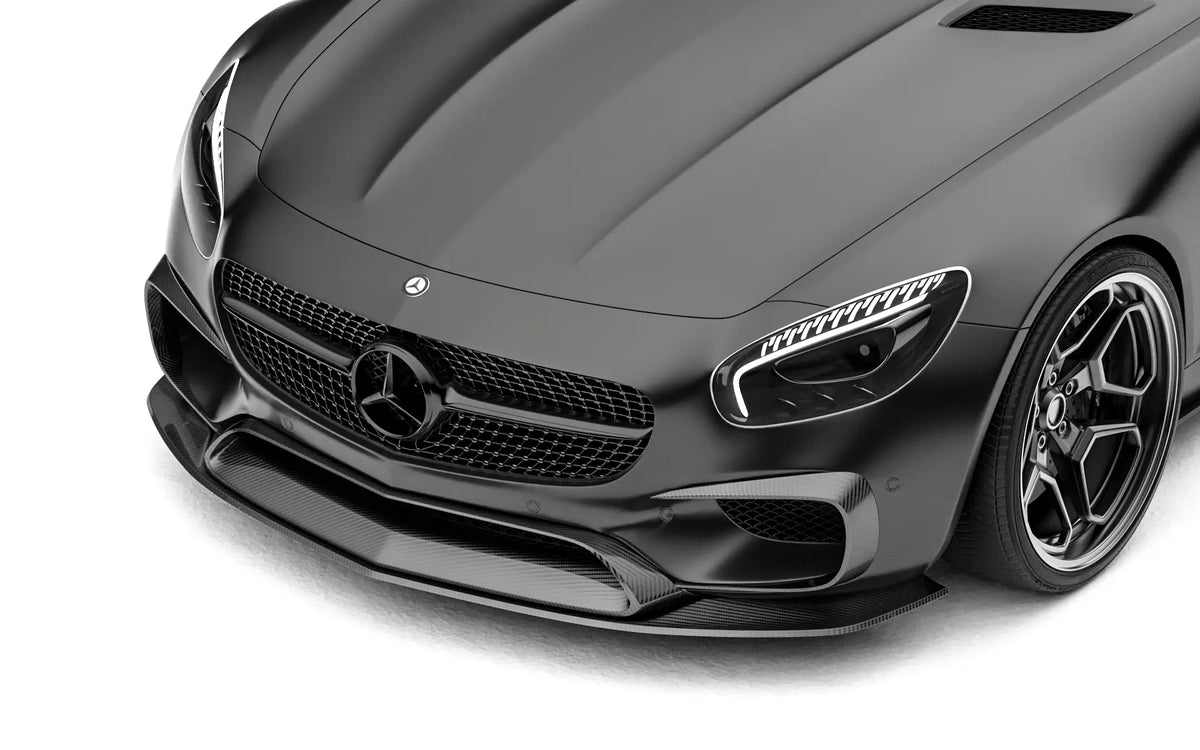
Today, Mercedes-Benz carbon fiber parts range from subtle mirror covers and interior trim to aggressive front splitters, rear diffusers, spoilers, side skirts, hoods and complete aerodynamic body upgrades. The important part is choosing components that actually suit the model, body style and overall design of the vehicle.
At Lux Carbon, the focus is on carbon fiber exterior and styling components for performance and premium vehicles, including Mercedes-Benz and AMG models.
This guide explains how to choose Mercedes carbon fiber upgrades, which parts create the biggest visual difference, what separates good carbon from cheap imitations, and how to build a coherent carbon styling package instead of simply adding unrelated accessories.
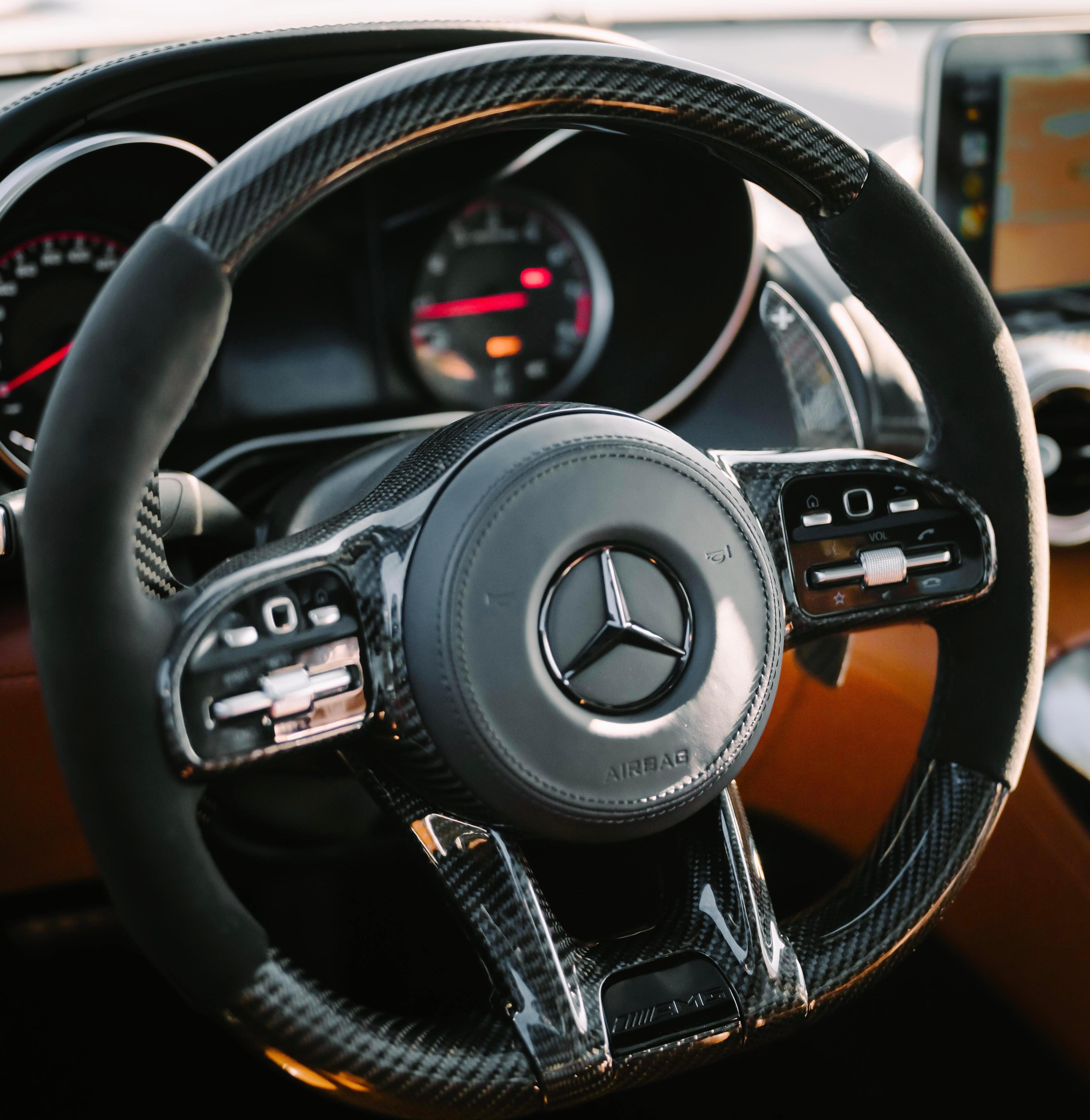
Why Carbon Fiber Works So Well on Mercedes-Benz Cars
Carbon fiber has become closely associated with high-performance vehicles because of its combination of low weight, stiffness and distinctive woven appearance. In road-car styling, however, its visual character is often just as important as its technical properties.
Mercedes-Benz vehicles are particularly well suited to carbon upgrades because many models already use strong body lines, large air intakes, sculpted bumpers and pronounced aerodynamic surfaces. Carbon fiber can emphasize those details rather than completely changing them.
On an AMG model, carbon parts can reinforce an already aggressive design. On a standard Mercedes-Benz, carefully selected components can create an OEM+ appearance inspired by higher-performance factory variants.
The key is balance.
A carbon front lip combined with matching mirror covers and a subtle rear spoiler often looks more coherent than installing one extremely aggressive component on an otherwise standard vehicle.
Mercedes Carbon Fiber Styling: OEM+ or Aggressive?
Before choosing individual parts, decide what kind of build you want.
OEM+ Carbon Styling
OEM+ builds retain the original Mercedes-Benz character while introducing carefully chosen performance details.
Typical upgrades include:
- carbon fiber mirror covers;
- subtle front bumper splitters;
- small trunk spoilers;
- carbon grille details;
- rear bumper inserts;
- interior carbon trim;
- factory-style diffuser upgrades.
This approach works particularly well on daily-driven C-Class, E-Class, CLA, CLS, GLC, GLE and S-Class models where the owner wants the vehicle to look more distinctive without appearing heavily modified.
AMG-Inspired Styling
The next step is a more performance-oriented package inspired by Mercedes-AMG design.
This can include:
- larger front splitters;
- side skirt extensions;
- more pronounced rear diffusers;
- larger trunk spoilers;
- canards and air-intake surrounds;
- carbon hood elements;
- multiple matching carbon components around the vehicle.
The result is noticeably more aggressive while still following the basic geometry of the Mercedes body.
Full Carbon Performance Look
For highly modified AMG cars, carbon fiber can become one of the primary visual elements of the build.
Cars in this category may use a complete front aero package, carbon hood, side extensions, large diffuser, wing, fender details and additional aerodynamic components.
Consistency becomes especially important here. Different weave directions, finishes and carbon patterns can make an expensive build look unfinished if the parts are selected independently.
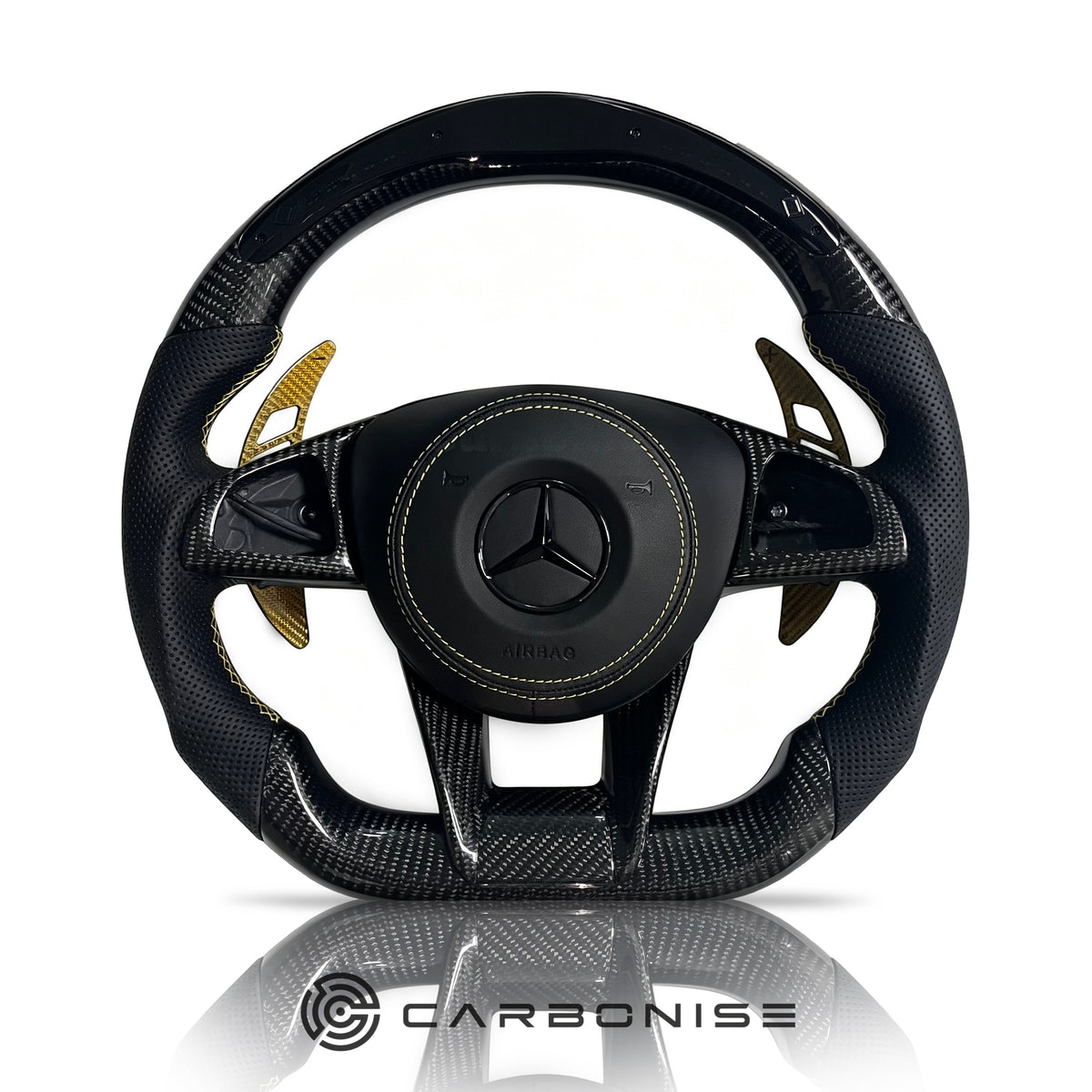
Best Mercedes-Benz Carbon Fiber Parts to Upgrade First
Not every owner needs a complete carbon body kit. Several relatively simple components can significantly change the appearance of the car.
1. Carbon Fiber Front Lip and Splitter
The front lip is one of the most noticeable carbon upgrades because it visually lowers the front of the vehicle.
Mercedes and AMG bumpers often have large lower openings and sculpted corners. A properly designed carbon splitter follows these lines and creates a stronger transition between the bumper and the road.
Depending on the design, a front lip may be:
- a single full-width component;
- a three-piece splitter;
- two corner extensions;
- an AMG-style aerodynamic lip;
- a more aggressive motorsport-inspired splitter.
Fitment is critical because even a visually impressive carbon component will look wrong if there are inconsistent gaps between the splitter and bumper.
2. Carbon Fiber Rear Diffuser
A rear diffuser can completely transform the back of a Mercedes-Benz, particularly on AMG-line and AMG models with large exhaust outlets.
Carbon creates strong contrast against painted bumpers and highlights the lower section of the vehicle.
Different diffuser designs can include larger fins, additional aerodynamic channels, extended side sections or integrated exhaust surrounds.
When choosing a diffuser, always verify the exact bumper version. Standard Mercedes-Benz, AMG Line and full AMG bumpers can look similar in photographs while using completely different mounting points and dimensions.
3. Carbon Fiber Spoiler
A spoiler is another upgrade that offers a strong visual effect without replacing major body panels.
Options range from small OEM-style trunk lips to aggressive high-kick spoilers and full wings.
For luxury-focused builds, a low-profile carbon trunk spoiler is usually enough to add visual definition. Performance-oriented AMG builds can support a more prominent design.
The correct spoiler should follow the width and curvature of the trunk rather than appearing like a universal component attached to the vehicle.
4. Carbon Fiber Mirror Covers
Mirror covers are one of the easiest ways to introduce carbon fiber into the exterior design.
They are particularly effective because the mirrors sit near eye level and naturally attract attention.
There are generally two types:
- replacement mirror housings;
- overlay covers installed over the original housing.
A replacement component usually provides a more integrated appearance, while an overlay can offer simpler installation.
Regardless of design, accurate edge alignment is important. Poorly shaped covers can create visible gaps around indicators, cameras or trim sections.
5. Carbon Fiber Side Skirts
Side skirt extensions visually connect the front and rear aerodynamic components.
This is especially useful when a vehicle already has a carbon front splitter and diffuser. Without a corresponding side element, the carbon package can sometimes appear concentrated only at the front and rear.
A subtle extension can make the entire vehicle appear lower and wider without dramatically altering the body.
6. Carbon Fiber Hood
A carbon hood is a much more substantial modification.
Depending on its construction, it may offer both visual and potential weight advantages, although actual weight savings vary significantly between manufacturers and construction methods.
Some hoods maintain factory styling while others add vents, power bulges or aerodynamic channels.
Because the hood is one of the largest visible panels on the vehicle, carbon weave quality, surface finish and panel alignment become extremely important.
7. Carbon Fiber Grille and Air Intake Details
Smaller carbon components around the grille and bumper openings can be used to complete a build.
These details work best after the larger components have already established the overall styling direction.
Examples include:
- air-intake surrounds;
- bumper canards;
- grille frames;
- fender vents;
- front bumper inserts.
Carbon Fiber vs Carbon-Look Parts
One of the most important distinctions when shopping for Mercedes carbon parts is the difference between genuine carbon construction and carbon-look finishes.
Real Carbon Fiber
Real carbon fiber components use woven carbon material as part of their construction or visible outer layer. Depending on how the component is manufactured, it may use carbon fiber together with resin, fiberglass reinforcement or other composite materials.
Higher-end manufacturing techniques can produce lighter and more structurally refined components, but the construction method varies considerably between parts.
Carbon Fiber Overlay
Some components use a structural base made from another material with genuine carbon fiber applied over the visible surface.
This method can be perfectly suitable for cosmetic parts such as mirror covers, trim and certain aerodynamic accessories.
Hydro-Dipped or Printed Carbon Look
These components imitate carbon visually but do not use real woven carbon fiber on the visible surface.
They can be inexpensive, but the difference usually becomes obvious when compared directly with a properly finished carbon component.
If you are building a premium Mercedes-Benz or AMG, mixing printed carbon-effect accessories with genuine carbon components often results in inconsistent textures and reflections.

Understanding Carbon Fiber Weave
Carbon fiber is not simply black material with a pattern. The weave itself contributes heavily to the appearance.
2x2 Twill
2x2 twill is one of the most recognizable patterns used on automotive carbon fiber components.
It produces the familiar diagonal appearance associated with many performance vehicles and aftermarket aerodynamic parts.
Plain Weave
Plain weave has a tighter, more uniform checker-like appearance.
It can look more technical and understated than twill carbon.
Forged Carbon
Forged carbon uses irregular carbon fragments rather than a traditional woven pattern.
The result is a more random appearance that works particularly well on modern performance builds where the owner wants something visibly different from traditional carbon weave.
Matching the Weave Matters
If you plan to install several Mercedes carbon components, try to keep the weave type and orientation consistent.
A mirror cover with one weave direction next to a fender component with the pattern running in the opposite direction may be noticeable under direct sunlight.
This becomes even more important when several carbon parts are positioned close together.
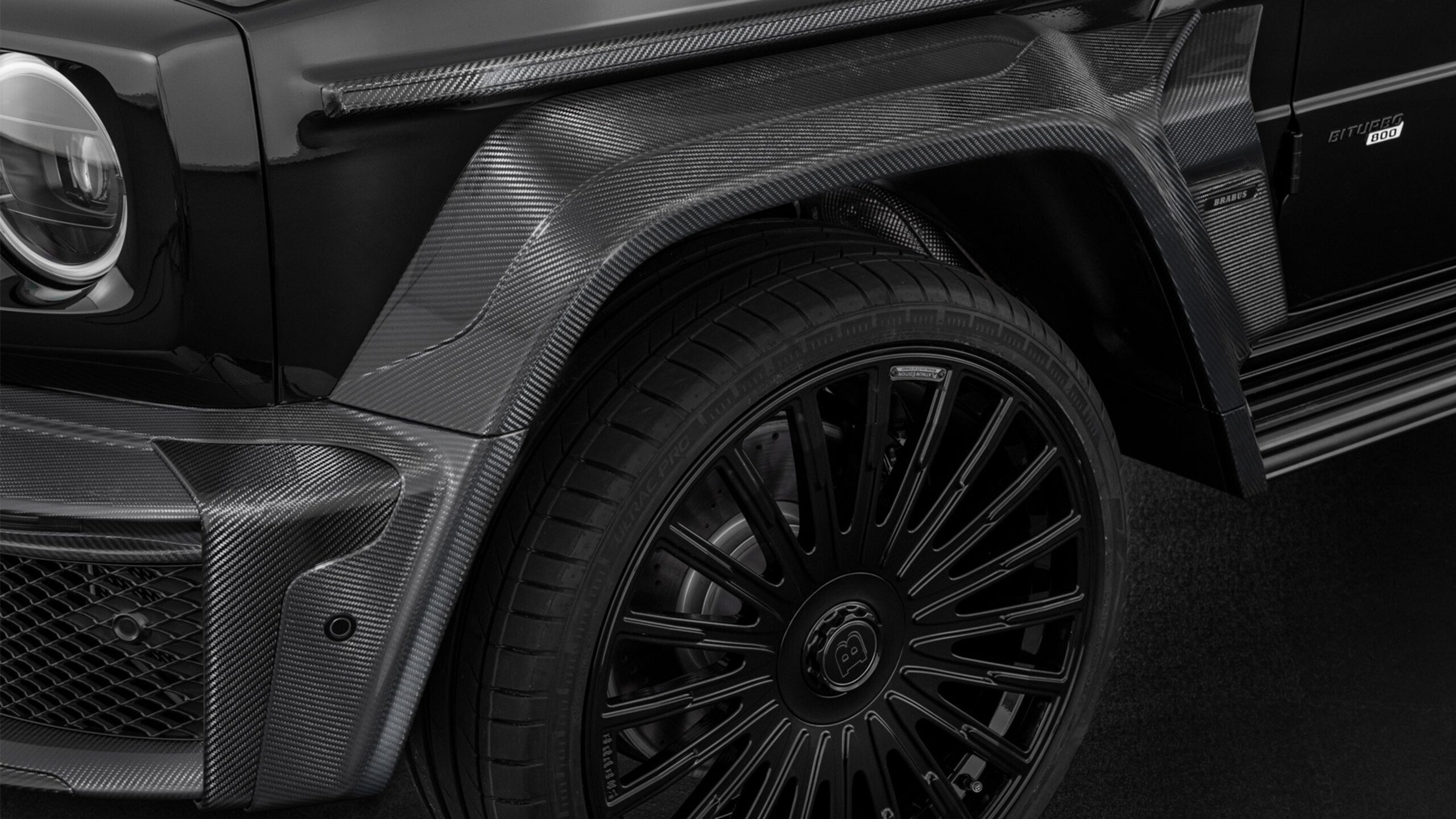
Gloss Carbon vs Matte Carbon
The final coating dramatically changes how carbon looks on the car.
Gloss Carbon Fiber
Gloss carbon emphasizes depth and reflection. Under sunlight, a high-quality clear coat makes the weave appear three-dimensional.
It suits most Mercedes-AMG styling packages because it contrasts strongly with both metallic and solid paint colors.
Matte Carbon Fiber
Matte carbon creates a more technical and understated appearance.
It often works particularly well alongside satin paint, matte wraps and vehicles using black exterior trim packages.
Satin Carbon Fiber
Satin provides a compromise between the two, reducing reflections while retaining more visual depth than a fully matte finish.
There is no universally correct choice. The finish should complement the rest of the car.
How Carbon Fiber Looks on Different Mercedes Colors
Carbon fiber can work with almost any body color, but the visual result changes significantly.
Black Mercedes-Benz
On a black car, carbon creates a subtle contrast. The weave becomes visible mainly when light reaches the surface.
This combination is ideal for an understated performance look.
White Mercedes-Benz
White paint creates one of the strongest contrasts with carbon fiber.
Front lips, mirror caps, side skirts and spoilers become immediately visible, making even a relatively simple upgrade package stand out.
Grey and Silver Mercedes-Benz
Grey and silver paint tends to create a balanced OEM+ appearance. Carbon remains clearly visible without dominating the vehicle.
Blue, Red and Other Strong Colors
Carbon works as a neutral performance accent against brighter paint colors. In these builds, limiting the number of different accent colors usually produces the cleanest result.
Mercedes-Benz vs Mercedes-AMG Fitment
One of the biggest mistakes when purchasing carbon parts is assuming that every component for the same model generation is interchangeable.
For example, the same Mercedes model can be available with:
- standard exterior styling;
- AMG Line package;
- pre-facelift bodywork;
- facelift bodywork;
- full Mercedes-AMG bodywork;
- different regional equipment;
- different parking sensors and camera systems.
A component advertised for a particular chassis generation may still require a specific bumper configuration.
Always verify:
- model;
- production year;
- chassis code;
- sedan, coupe, wagon or SUV body style;
- standard or AMG Line body package;
- AMG model variant;
- facelift or pre-facelift design;
- relevant bumper or body-panel version.
Popular Mercedes Models for Carbon Fiber Upgrades
Carbon styling is available across a wide range of Mercedes-Benz vehicles, but several model families are particularly popular.
Mercedes-Benz C-Class and AMG C-Class
The C-Class platform offers one of the widest ranges of aftermarket styling possibilities. Front splitters, diffusers, spoilers, mirror covers and side extensions can create anything from a subtle OEM+ build to a complete AMG-inspired appearance.
Mercedes-Benz E-Class
Because the E-Class combines luxury with a relatively large body, carefully positioned carbon details work particularly well. Mirror covers, front bumper details and rear spoilers can add a performance character without overwhelming the design.
Mercedes-Benz CLA
The CLA's coupe-style roofline and aggressive bumper shapes make it particularly suitable for aerodynamic carbon upgrades.
Mercedes-Benz CLS
CLS models tend to benefit from cleaner, more integrated carbon pieces. A subtle spoiler and lower aerodynamic components usually complement the vehicle's flowing body design.
Mercedes-Benz GLC and GLE
Performance SUVs can use carbon components to visually reduce their height and emphasize width. Front splitters, diffuser sections, mirror covers and spoiler extensions are popular choices.
Mercedes-AMG GT
The AMG GT is already designed around performance, so larger carbon aerodynamic components can appear natural when properly integrated.
For these vehicles, build quality becomes particularly important because the carbon parts are being installed on a car whose original exterior already has complex aerodynamic surfaces.
How to Identify Better-Quality Carbon Fiber Parts
Photos can make almost every carbon component look impressive. The real differences become clearer when examining the details.
Consistent Weave
The visible weave should follow the shape of the component naturally. Severe distortion, inconsistent patterns or badly aligned sections can indicate poor manufacturing quality.
Clean Edges
Edges, mounting tabs and openings should be properly finished. These areas often reveal quality differences that are not immediately visible in promotional photographs.
Clear-Coat Quality
Gloss carbon should have a consistent surface without excessive cloudiness, major waves or poorly finished sections.
UV-resistant finishing is particularly important for exterior parts exposed continuously to sunlight.
Accurate Shape
Perfect-looking carbon is of little value if the component does not follow the factory body panel correctly.
Fitment should always be considered alongside surface quality.
Proper Mounting Design
A good part should provide a realistic installation method using appropriate mounting points, automotive adhesive, clips, screws or a combination depending on the component.
Dry Carbon vs Wet Carbon
These terms appear frequently in carbon fiber product descriptions.
In simplified terms, different manufacturing methods use different resin application, molding, pressure and curing processes.
Dry/prepreg carbon manufacturing can produce extremely refined and lightweight components when properly executed, but it is also substantially more expensive.
Wet-lay carbon and carbon-overlay construction are widely used for aftermarket cosmetic components where absolute minimum weight is not the primary objective.
For a mirror cover or decorative trim, paying a major premium for the lightest possible manufacturing process may provide little practical advantage. For larger performance-oriented panels, construction method can become more relevant.
Does Carbon Fiber Actually Reduce Weight?
It can, but the answer depends entirely on the component.
A properly engineered carbon replacement panel may weigh less than the factory part it replaces. However, a cosmetic carbon overlay installed on top of an existing component does not create a meaningful weight reduction.
This is why buyers should distinguish between:
- full replacement carbon components;
- carbon composite components;
- carbon overlays;
- cosmetic carbon trim.
For most street-car styling projects, appearance and fitment are more important than small theoretical weight differences.
Building a Complete Mercedes Carbon Package
Instead of buying random pieces one at a time, think about the vehicle as a complete design.
A balanced package could start with:
- front splitter;
- mirror covers;
- side skirt extensions;
- rear diffuser;
- trunk spoiler.
This creates a continuous carbon theme around the vehicle.
After those main components are installed, smaller details such as intake trims, fender pieces or grille accents can be added without making the car appear visually overloaded.
Common Mistakes When Buying Mercedes Carbon Fiber Parts
Buying by Model Name Only
“Mercedes C-Class” is usually not enough information to guarantee fitment. Exact generation, year, body type and bumper configuration matter.
Mixing Too Many Carbon Styles
Twill carbon, forged carbon, matte carbon and glossy carbon can all look excellent individually. Using all of them on the same vehicle rarely creates a coherent result.
Choosing the Most Aggressive Part Available
The largest spoiler or deepest diffuser is not automatically the best option.
The part needs to match the rest of the vehicle.
Ignoring Ground Clearance
Front splitters and side extensions reduce effective clearance. This matters on lowered vehicles, steep driveways, parking ramps and roads with large speed bumps.
Ignoring Installation Requirements
Some components can be fitted relatively easily, while others may require bumper removal, drilling, alignment work or professional installation.
Understand the installation method before ordering.
Carbon Fiber and AMG Styling
AMG styling provides a natural reference point for Mercedes carbon builds because Mercedes-AMG already combines large aerodynamic surfaces with premium materials.
However, an AMG-inspired build does not need to copy one particular factory package exactly.
Aftermarket carbon gives owners the opportunity to create a more individual interpretation.
A conservative build might use only factory-inspired shapes, while another vehicle may combine AMG-style geometry with larger motorsport-derived aerodynamic elements.
The important factor is maintaining a consistent visual language across the car.
Should You Install Carbon Parts Professionally?
That depends on the component.
Mirror covers and certain small trim pieces can often be installed without major disassembly.
Large front lips, side skirts, diffusers, hoods and wings deserve more careful installation.
Professional fitting can help with:
- correct alignment;
- even panel gaps;
- secure mounting;
- avoiding damage to painted surfaces;
- checking clearance around exhaust systems;
- proper positioning before adhesive cures.
Dry-fitting the component before final installation is strongly recommended.
Caring for Mercedes Carbon Fiber Parts
Exterior carbon should be treated similarly to high-quality painted bodywork.
Regular washing prevents dirt and road contaminants from remaining on the clear coat for long periods.
Avoid aggressive abrasives unless the surface is being professionally corrected.
Where appropriate, paint-protection film or ceramic protection can also be considered for exposed components such as front splitters and mirror covers.
The front splitter deserves particular attention because it is constantly exposed to stones, road debris and contact with ramps or curbs.
Is a Mercedes Carbon Fiber Upgrade Worth It?
For owners primarily interested in styling, carbon fiber offers something that painted ABS or generic black accessories cannot fully reproduce: visible material texture and depth.
It can make a standard Mercedes look more individual or push an AMG build further toward a motorsport-inspired appearance.
The best results rarely come from installing the maximum possible number of carbon pieces. They come from choosing several components whose shape, finish and proportions work together.
Start with the areas that visually define the car — usually the front splitter, rear diffuser, spoiler and mirrors — and expand the package from there.
Frequently Asked Questions About Mercedes-Benz Carbon Fiber Parts
What are the most popular carbon fiber upgrades for Mercedes-Benz?
Front splitters, rear diffusers, spoilers, mirror covers and side skirt extensions are among the most common upgrades because they create a noticeable visual change without replacing major structural body panels.
Are Mercedes-Benz and Mercedes-AMG carbon parts interchangeable?
Not necessarily. AMG, AMG Line and standard Mercedes-Benz models can use different bumpers, side skirts and mounting points even within the same model generation.
Is real carbon fiber better than carbon-look plastic?
For buyers looking for authentic carbon appearance, genuine carbon provides the characteristic woven depth that printed or hydro-dipped finishes attempt to imitate. The best option still depends on budget and the purpose of the component.
Which carbon weave is best for Mercedes-Benz?
There is no single correct weave, although 2x2 twill is one of the most widely used patterns in automotive styling. Matching existing carbon components is usually more important than choosing one particular weave.
Should all carbon parts have the same finish?
For a coherent build, using the same or closely matched weave and finish is generally preferable.
Can carbon fiber parts reduce vehicle weight?
Full replacement carbon components can potentially reduce weight compared with heavier original panels, but the actual difference depends on construction. Cosmetic overlays should be considered styling modifications rather than weight-reduction upgrades.
What should I check before ordering a Mercedes carbon body part?
Confirm the exact Mercedes model, production year, body style, chassis generation, facelift status and whether the car uses a standard, AMG Line or full AMG exterior package.
What Mercedes carbon part should I upgrade first?
A front splitter or spoiler usually creates one of the most noticeable changes. Mirror covers are a good starting point for owners who want a more subtle carbon accent.
Upgrade Your Mercedes-Benz with Carbon Fiber
A well-planned carbon package can change the character of a Mercedes-Benz without taking away the qualities that make the original design attractive.
Whether the goal is a subtle OEM+ C-Class, a more aggressive AMG-style E-Class, a carbon-accented GLE or a complete performance-focused AMG build, the same principles apply: choose the correct fitment, keep the materials consistent and build the car as one complete design rather than a collection of unrelated accessories.
Explore carbon fiber parts and premium exterior upgrades at Lux Carbon to discover styling options for Mercedes-Benz and other performance vehicles.