Oct 03, 2026 / By Lux Carbon / in Carbon Fiber Guides
Carbon fiber has a reputation for high performance, but an automotive carbon part is not made from fiber alone. The fibers sit in a resin matrix and the visible surface may include clear coat, gel coat, adhesive and bonded inserts. Near exhaust outlets, turbo hardware or manifolds, those materials can reach their limits before the carbon reinforcement itself does.
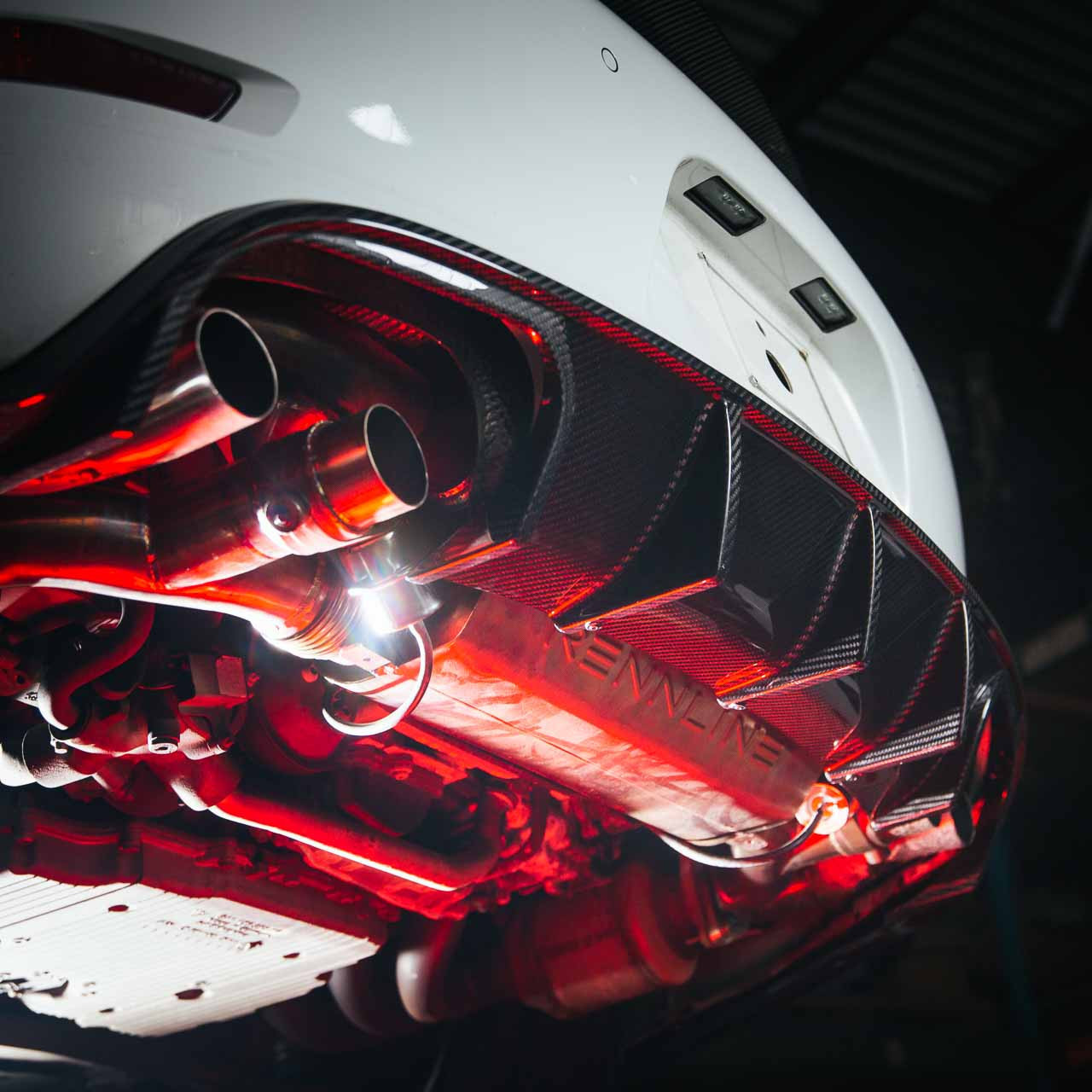
The useful questions are: what resin system was used, what temperature is the finished part designed to tolerate, how close is the heat source, and how long will the exposure last? A road car that sees brief heat cycles is different from a track car running repeated high-load sessions. A decorative carbon skin is also different from a properly engineered high-temperature composite.
If the seller cannot identify the intended location or heat limitations of the part, do not assume every exposed-carbon component is suitable next to an exhaust outlet.
A diffuser may fit the bumper perfectly but still place a carbon edge too close to the exhaust tips. Check clearance with the exhaust cold, then re-inspect after heat cycles because exhaust systems expand as they warm. Aftermarket tips can also extend, rise or move laterally compared with stock.
Look for yellowing, cloudy clear coat, print-through, blistering, soft adhesive, resin smell or a change in surface texture near the hot zone. Those are reasons to investigate rather than simply applying another coat of polish.
Browse Carbon Fiber Rear Diffusers and evaluate exhaust openings and mounting geometry together.
Depending on the application, manufacturers may use reflective barriers, insulated washers, air gaps or dedicated heat shields. Avoid placing an unknown adhesive foil directly on visible carbon simply because it is marketed as “heat tape.” The shield itself must tolerate the temperature and must not trap moisture, rub through the laminate or create a new mounting stress.
For engine-bay pieces, the existing Carbon Fiber Intake Tubes & Engine-Bay Parts guide covers material choice, airflow and service access. For vented hoods, also review rain and water management.
A diffuser that is pulled out of shape by its fasteners can end up closer to the exhaust on one side. A missing spacer can place a heat shield directly against the laminate. That is why correct fasteners and washers and a complete dry fit matter before the first drive.
Yes. The risk depends on the resin, coating, distance from the exhaust, shielding and operating temperature. The carbon fibers are only one component of the finished part.
No. Heat can also affect resin or clear coat. Compare where the change occurs: localized damage near an exhaust outlet suggests a different cause than uniform sun exposure.
That can be appropriate on some designs, but follow the exhaust and diffuser manufacturer’s intended geometry. Tip position also affects appearance and bumper clearance.
Only after confirming that the barrier is rated for the environment and compatible with the part. Poorly placed shielding can trap heat or damage the finish.
Oct 03, 2026 by Lux Carbon
Oct 03, 2026 by Lux Carbon
Cookie preferences