Oct 03, 2026 / By Lux Carbon / in Carbon Fiber Guides
DIY carbon work is often discussed as a tooling problem: which drill bit, which cutting wheel, which sandpaper. The part many owners underestimate is dust control. Cutting, drilling and sanding cured carbon components can release fine particulate from carbon fibers, resin and surface coatings. The goal is to keep that material out of your breathing zone, eyes, skin, tools and the rest of the garage.
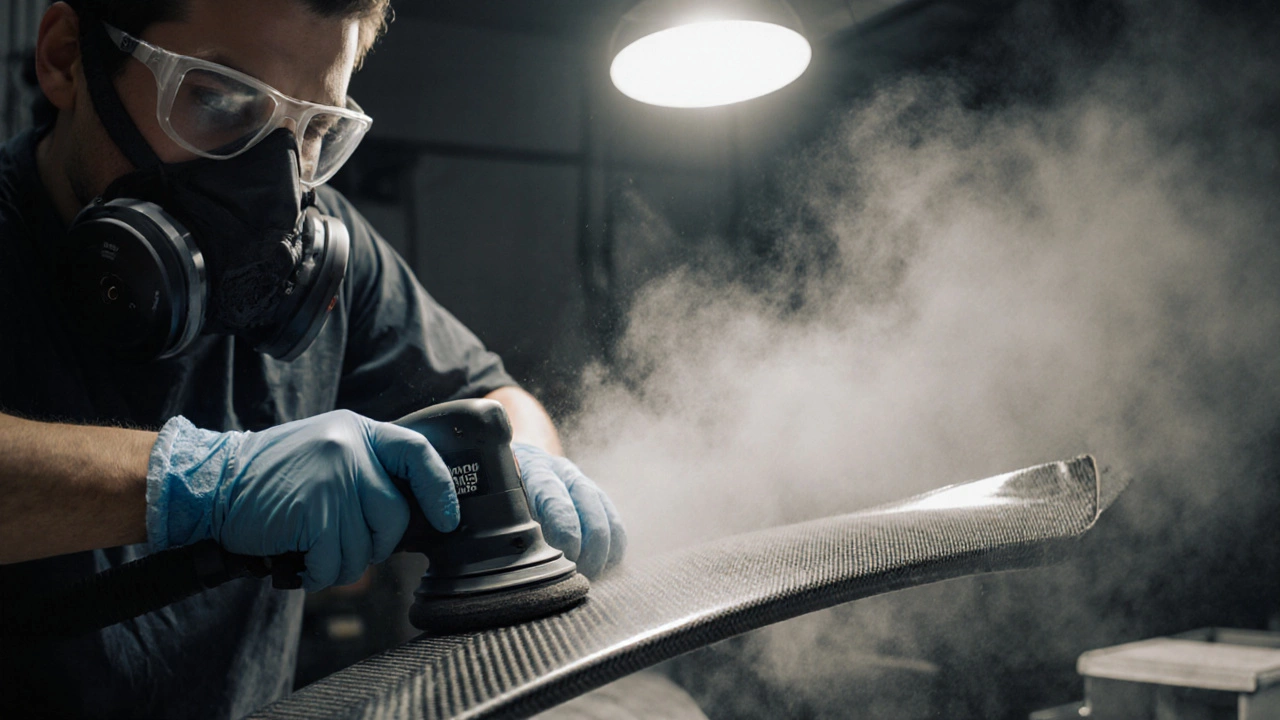
Do not sand a carbon lip next to an open engine, clean detailing towels, food, household storage or a running fan that will spread dust. Use a dedicated work area with local extraction when possible. If the job is small, a controlled outdoor or professional workshop setup can be easier to manage than contaminating an attached garage.
Protect the part as well. Abrasive dust can scratch a gloss clear coat when it is wiped across the surface, so mask finished areas before cutting.
Respiratory protection must be selected for the particulate and work environment, fitted correctly and used according to the manufacturer’s instructions. Eye protection is important because fine fibers and dust can irritate eyes, while gloves and covered skin reduce direct contact with dust and uncured repair materials. For prolonged or professional work, follow your workplace safety program and the safety data sheets for the specific resin, coating and consumables involved.
If you develop breathing difficulty or significant irritation after exposure, stop work and seek medical advice rather than trying to diagnose the reaction from a forum.
A vacuum or extraction shroud near the cut is more effective than cleaning the whole room afterward. Wet drilling or wet sanding can reduce airborne dust for some operations, but only when the tool, electrical setup and material process are compatible with water. Never improvise a wet method around equipment that is not designed for it.
The companion drilling guide explains how backing support and controlled feed improve the hole itself. Dust control does not replace proper machining technique.
Do not use compressed air to blow carbon dust across the workshop. Capture settled dust with suitable filtered extraction or damp methods compatible with the surface, then dispose of contaminated consumables according to local rules. Wipe tools before carrying them into clean areas.
If the part needs extensive trimming, bodywork or laminate repair, paying a composite specialist may be cheaper than buying the extraction, PPE and refinishing equipment needed to do one job correctly.
Use the workshop installation guide to decide which operations should be performed during test fitting and which should be left to a professional. If damage is the reason for sanding, first determine whether you are dealing with cosmetic finish damage or a structural crack using the repair-or-replace guide.
No. Machining composites creates fine industrial particulate from fiber, resin and coatings, so it should be controlled rather than allowed to spread through a garage.
Respiratory protection should be selected and fitted for the specific task. Follow the respirator manufacturer, safety data sheets and workplace guidance rather than relying on a generic mask label.
Wet methods can reduce airborne dust, but they are only appropriate when the tool and process are designed for it and when the resulting contaminated slurry can be controlled.
Avoid it. Compressed air redistributes fine particulate into the air and onto surrounding surfaces instead of capturing it.
Oct 03, 2026 by Lux Carbon
Oct 03, 2026 by Lux Carbon
Cookie preferences