Oct 03, 2026 / By Lux Carbon / in Carbon Fiber Guides
Carbon fiber parts are not automatically “summer only,” but winter changes the type of abuse they receive. A front lip that survives clean dry roads may face packed snow, abrasive grit, road salt, frozen slush and steeper approach angles created by snowbanks. The laminate itself is only part of the system: clear coat, PPF, mounting hardware and repaired edges all need attention.

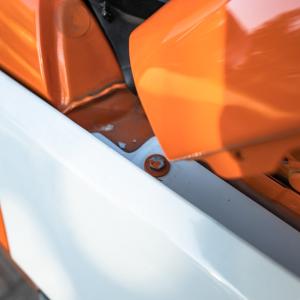
Road contamination can sit on clear coat, around fasteners and inside mounting joints. The carbon reinforcement does not rust like steel, but metal brackets, bolts and inserts still can corrode, and trapped grime can stain or abrade the finish. Rinse the lower aero regularly when temperatures and local wash conditions allow.
Use the carbon fiber care guide for safe washing methods. Avoid dry-wiping salty film from gloss carbon because grit can create fine scratches.
Snow can hide curbs, frozen ruts and blocks of ice. A lip can also act like a small plow when deep snow packs underneath the bumper. If the car is lowered, measure the real winter clearance rather than assuming the summer route will remain usable.
The daily-driver front-lip guide explains how driveways and ramps change effective clearance. In winter, add snow depth and frozen debris to that calculation.
A hard scraper or metal tool can damage clear coat and concentrate force on a thin edge. Let ice release gradually using a safe wash or warm environment compatible with the part and vehicle. Do not pour very hot water onto a frozen panel; rapid temperature change is unnecessary and can create problems for coatings, seals and surrounding components.
A front lip with an open crack or delaminated edge can collect contamination and moisture. If the laminate is damaged, decide whether it needs proper repair before winter using the repair-or-replace checklist. Cosmetic chips in the coating should also be monitored so they do not grow unnoticed under dirt.
At the end of the season, remove packed dirt from mounting areas and inspect bolts, clips, washers and brackets. Look for corrosion, loose hardware, elongated holes and stress marks around carbon tabs. The fastener guide explains why a loose joint should be diagnosed rather than simply overtightened.
If winter use is unavoidable, select parts with realistic clearance from Carbon Fiber Front Lips & Splitters instead of automatically choosing the deepest design.
No. Suitability depends on the complete part, resin, coating, mounting system and service conditions. Winter road impacts and contamination are often the practical concern on street cars.
Carbon fibers do not rust like steel, but salt and moisture can affect metal hardware and can leave contamination on coatings and joints.
That depends on ground clearance, snow depth, road maintenance and how the part is mounted. For very low cars in heavy-snow regions, seasonal removal can be a rational option if the design allows it.
Avoid hard scraping on visible carbon finishes. Mechanical impact can scratch the clear coat or damage thin edges.
Oct 03, 2026 by Lux Carbon
Oct 03, 2026 by Lux Carbon
Cookie preferences