Sep 20, 2026 / By Lux Carbon / in Carbon Fiber Guides
The Lamborghini Aventador LP700-4 already has the proportions of a concept car, so a carbon body kit does not need to reinvent it. The most convincing upgrades reinforce the factory wedge: a sharper front lip, deeper side skirts and a rear component that repeats the same visual weight.
This review examines the coordinated LP700-4 products in the Lux-Carbon Lamborghini catalog: the 2011–2016 carbon front bumper lip, carbon side skirts and carbon rear bumper.
Aventador modification discussions often move quickly from appearance to practicality. Owners and enthusiasts ask whether a dramatic front splitter will survive normal roads and whether large side skirts make the car too difficult to use. That is a legitimate concern: the Aventador is already low and wide, so an extra few centimeters of projection can matter.
Before ordering the full kit, measure the car you actually drive. Include driveway ramps, underground garages, workshop lifts and trailer loading. A visually perfect kit that prevents normal use is not a successful street-car upgrade.
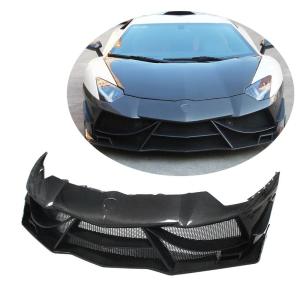
The Aventador LP700-4 2011–2016 carbon front bumper lip creates the strongest visual change at the front. It extends the dark lower edge and makes the nose appear even wider.
Quality inspection should focus on the long span across the bumper. Check that the center does not bow and that both outer corners meet the bumper at the same angle. Long carbon components can magnify small molding errors, so full-width dry-fitting is mandatory.
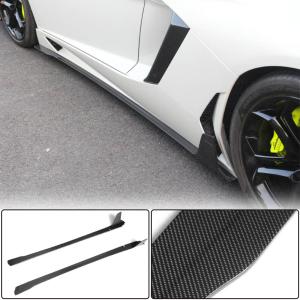
The LP700-4 carbon side skirts visually connect the front lip to the rear. On the Aventador's long, low side profile, the skirts can make the car look even more planted. They also create new vulnerable edges along areas used during servicing and transport.
Make sure the installer identifies the correct lift points and confirms the new skirts do not interfere with them. After installation, keep a note in the vehicle or service record showing the safest lifting procedure.
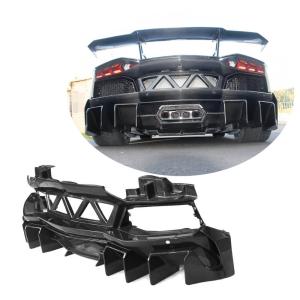
The Aventador LP700-4 carbon rear bumper is a more substantial change than a bolt-on diffuser or splitter. A full bumper component influences panel gaps, exhaust clearances, mesh, reflectors and potentially parking or lighting hardware.
Dry-fit the bumper with every transferred component installed before final alignment. The gap to quarter panels and rear lamps should be assessed under normal body tension, not while the bumper is loosely supported.
| Approach | Advantage | Risk |
|---|---|---|
| Full front/side/rear package | Best finish consistency and visual continuity | Higher installation complexity and cost |
| Front lip first | Highest immediate visual impact | Can look front-heavy until side/rear pieces follow |
| Side skirts first | Subtle side-profile change | May lack visual connection to stock bumpers |
| Rear bumper first | Major rear transformation | Most involved fitment and component transfer |
For most owners, front lip first is the easiest way to validate finish and supplier quality. If the weave, gloss and mold quality are right, order the side and rear components from the same product family.
Enthusiasts often ask whether a body kit is carbon or fiberglass because photos can hide the difference. Genuine exposed carbon should show real fiber structure, while fiberglass may be painted or carbon-skinned. A carbon skin over fiberglass can still be a legitimate cosmetic solution, but it is not the same as a full carbon laminate.
Ask how the part is constructed and inspect the backside when possible. On a large bumper, construction also affects stiffness and how the panel holds its shape across wide spans.
A sacrificial clear protection film can reduce superficial stone damage, but it cannot protect carbon from a hard curb impact. Driving technique and route awareness remain the primary protection.
After the lower kit is complete, the Aventador carbon engine bonnet hood cover and door-side air fender vent can move the carbon theme upward. That is a separate visual decision: lower-aero carbon looks functional and planted; large upper-body carbon makes the build much more dramatic.
Read the Aventador hood and vent review before adding these pieces, and use the forged vs woven carbon guide if you are comparing different carbon textures. The main Lamborghini carbon guide provides the full model-to-model context.
No. The featured components are listed for specific LP700-4 2011–2016 applications. Later variants and special models can have different bodywork.
They serve different purposes. A full bumper can change weight and construction substantially; an overlay is mainly a cosmetic addition. Fitment and intended use matter most.
It can reduce effective approach angle. Measure your real routes and use the lift system intelligently before choosing the most aggressive design.
Ideally, yes. That increases the chance of consistent weave, gloss and design language.
Browse front lips, side skirts and exterior carbon panels.
The best Aventador LP700 carbon body kit strengthens the factory wedge without making the car harder to use than necessary. Start with exact fitment and real-world clearance, then build a matched front-side-rear package. Large carbon surfaces leave little room for poor alignment, so professional dry-fitting is non-negotiable.
Oct 03, 2026 by Lux Carbon
Oct 03, 2026 by Lux Carbon
Cookie preferences