Sep 20, 2026 / By Lux Carbon / in Carbon Fiber Guides
A carbon hood or large vent panel changes a Lamborghini Aventador more dramatically than a small splitter because the material moves into the car's main visual surfaces. On an LP700-4, that can produce a purposeful motorsport look—or an obvious mismatch if the gloss, weave or panel gaps are wrong.
This review focuses on the Aventador LP700-4 2011–2016 carbon fiber engine bonnet hood cover and LP700-4 carbon door-side air fender vent, with fitment and installation checks for owners considering carbon above the lower aero line.
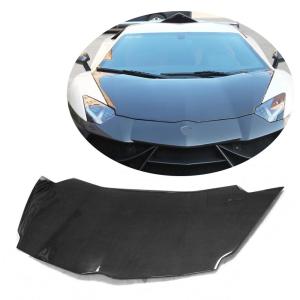
The Aventador carbon engine bonnet hood cover creates a large exposed-carbon surface. Unlike a lip, which reads as a dark edge, the bonnet becomes a focal point. The carbon weave and clear coat will therefore be viewed in broad reflections from the sky and surrounding buildings.
Large flat or gently curved carbon areas reveal waviness easily. View the part under long fluorescent reflections or outdoor light before installation. Distorted reflections can indicate surface irregularity even when the weave itself looks good.
The Aventador's factory body has strong geometric shut lines. A large carbon component should preserve those lines. Compare gaps at multiple points, not just the front corners. If the component is a cover rather than a full replacement, check added edge thickness and how it meets adjacent painted panels.
Do not pull a warped carbon panel into shape using fasteners. That loads the laminate and can create stress around mounting points. The correct fix is to address fitment before permanent installation.
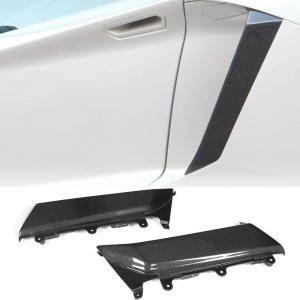
The Aventador carbon door-side air fender vent is smaller but sits in a visually complex area. Its perimeter needs to follow the factory opening cleanly, and the left/right parts should mirror each other.
Vents can be a good way to add carbon above the side skirt without replacing a large panel. They also help visually connect the carbon side skirts to the upper body.
There is no fixed percentage at which a Lamborghini becomes “too carbon.” The useful test is whether each new carbon zone has another element that explains it. A carbon hood plus side vents can work when the front lip, side skirts and rear package also use carbon. A single giant carbon hood on an otherwise stock-colored car becomes the dominant feature by design.
If your goal is OEM+, finish the front-lip, side-skirt and rear-bumper package first, then decide whether the upper surfaces need more contrast. If your goal is a show build, large exposed panels may be exactly the point.
Large woven-carbon surfaces make the twill pattern very obvious. Small chopped/forged patterns create a very different visual scale. Mixing them can work, but on a hood-sized component the difference becomes impossible to ignore. The forged carbon vs woven carbon Lamborghini guide explains the material appearance in detail.
| Surface | What the eye notices first | Quality priority |
|---|---|---|
| Large bonnet/hood | Reflection quality and weave continuity | Surface flatness, UV clear coat, panel gaps |
| Side vent | Edge fit and left/right symmetry | Mold accuracy, edge thickness, mounting |
| Lower lip/skirt | Overall silhouette | Clearance, mounting strength, edge durability |
Any component around the engine compartment must tolerate the intended thermal environment and preserve factory cooling paths. Carbon itself can withstand significant temperatures depending on the resin system, but the resin and clear coat are the limiting factors. Do not assume every cosmetic carbon component is suitable near high heat.
Keep vents, seals and service access unobstructed. After installation, inspect for heat discoloration, resin print-through or changes near exhaust-side heat sources during the first weeks of use.
A large carbon bonnet is a prime candidate for clear PPF because it faces stone impacts and has a high-value clear-coated surface. The installer should inspect the carbon for pinholes or raised edges before film application. Film can protect a good surface; it should not be used to hide manufacturing defects.
On sharp vent edges, film installation is more difficult. Decide whether full wrapping, partial coverage or ceramic coating is appropriate based on the actual geometry.
Verify the exact product construction and installation design before ordering. The product title describes an engine bonnet hood cover, so the fitting method should be confirmed for the intended vehicle.
Yes. They can work as standalone accents, but they look more integrated when another carbon element appears along the same side profile.
Low-quality or poorly protected resin/clear coat can discolor under UV and heat. A quality automotive UV-stable clear coat and proper maintenance reduce the risk.
For a road-driven Aventador, PPF is worth considering because the large forward-facing surface is exposed to stone impacts.
See carbon hoods and engine covers, carbon vents and canards and all Lamborghini carbon parts.
An Aventador carbon hood is a statement piece, while carbon side vents are precision accents. Both can look factory-level only when panel gaps, reflections, edge thickness and finish are controlled. Complete the lower carbon package first if you want restraint; move to the bonnet and vents when you deliberately want carbon to become a primary design feature.
Oct 03, 2026 by Lux Carbon
Oct 03, 2026 by Lux Carbon
Cookie preferences