Sep 27, 2026 / By Lux Carbon / in Carbon Fiber Guides
Product listings often use spoiler, wing, ducktail and roof extension interchangeably. On a hatchback, the roof-edge piece may be part of the moving tailgate while a large wing transfers load through separate brackets. Before choosing a carbon upgrade, map the actual mounting surface and what happens when the hatch opens.
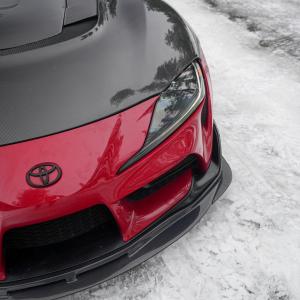
Start with the actual parts: browse relevant carbon parts. Photos below illustrate the topic; they do not prove the fitment or construction of any particular seller item.
_red.JPG)
Choose the component that matches the exact vehicle and installation conditions, then verify underside geometry, hardware and finish using real product photographs. Do not infer structural strength, aerodynamic performance or fitment from a carbon-look surface. The checks below show what evidence to request before paying and what to inspect before irreversible installation.
A roof spoiler sits at the upper trailing edge of a hatch, frequently attaching to a factory plastic spoiler or an OEM mounting area. A deck-lid lip bonds to a trunk surface on a sedan or coupe. A pedestal wing has discrete feet and may need reinforcement and a dedicated load path. A picture of a similar body is not enough to establish interchangeability.
Measure the hatch width, curvature and the shape of any factory high-mounted brake lamp. Confirm whether a listing includes a full replacement panel or an add-on skin and whether it supplies a left/right pair where applicable.
Open the hatch fully while inspecting its path near the roof, aerial, rear glass and nearby walls. A longer upper extension may approach the roof skin as the tailgate rotates. Consider a garage with a low ceiling or mounted bicycle carrier before adding a projecting part.
Never adjust hinge stops or gas struts to accommodate an ill-fitting spoiler without the car manufacturer’s procedure. A badly attached piece can catch on seals or damage paint with repeated opening.
If the factory spoiler contains a brake lamp, washer jet, camera or antenna, the replacement must preserve those functions. Request a backside image showing the exact holes and connectors. Decorative styling parts do not imply that electrical equipment is included.
Any changes to lamps or rear visibility may require approval. Treat lamp wiring and structural attachment as different tasks, and have electrical integration checked by a qualified installer.
Roof-edge devices alter separation and can affect wake characteristics, but a product photograph does not establish useful downforce, drag reduction or fuel-efficiency gain. A tall wing on a hatchback may add loads that the underlying panel was never designed to carry.
For a street car, choose with documented compatibility and secure mounting. For a performance application, ask for engineering data and a complete front-to-rear assessment rather than relying on a social-media before/after image.
Confirm the actual fit with all doors and hatch movement before exposing tape or drilling. Photograph center alignment, edge gaps and lamp position. Use the product maker’s specified adhesive, primers, hardware and cure conditions. A roof spoiler that springs away from the surface is not fixed by adding more pressure during a short installation.
On a bolted design, avoid elongating holes or drilling into unknown electrical and structural regions. Water sealing and corrosion protection must be part of the specified procedure.
Compare upper spoiler projection with the front lip and rear diffuser. A subtle roof blade can balance a clean street kit; a large race-style wing can change the design and create additional mounting work. Check weave, finish and daylight color rather than purchasing by label alone.
Browse roof spoilers and wings separately from complete body kits, and confirm the exact hatch or trunk variant before ordering.
| Check | Evidence to keep |
|---|---|
| Vehicle | Production year, version, market and current bumper or body specification |
| Part | Exact variant, dimensions, backside photos and supplied hardware |
| Material | Construction description, finish and intended exterior use |
| Installation | Manufacturer method, dry-fit photos and service clearance |
| After-sale | Shipping inspection record, current seller terms and return procedure |
Spoilers & Wings · Carbon Fiber Body Kits.
No. Their geometry and mount types can be very different.
Do not improvise a tape-only mount; use only a validated manufacturer system.
No. Factory spoiler, lamp and body changes can affect fitment.
It can. Confirm that all factory lighting remains correctly visible and operational.
Do not assume any quantified benefit without model-specific test data.
Centerline, both ends, full hatch opening and any factory equipment openings.
Use actual part and vehicle evidence to make the purchase decision. Confirm the full contents and installation method with the seller, preserve the original components when feasible, and stop work if the fitment or mounting is not as specified. The linked product categories show the currently listed choices; compatibility must be established for the exact item, not inferred from this editorial guide.
Reader-question context: owner discussion 1 · owner discussion 2. These discussions identify recurring questions; they are not technical installation authority.
Oct 03, 2026 by Lux Carbon
Oct 03, 2026 by Lux Carbon
Cookie preferences