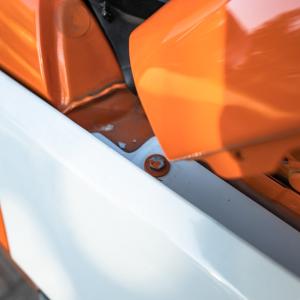
Oct 03, 2026 / By Lux Carbon / in Carbon Fiber Guides
Owners fitting an aftermarket carbon fiber hood often ask the same question: if the factory latch still works, are hood pins actually necessary? The useful answer is not a universal yes or no. The correct retention system depends on the hood construction, the manufacturer’s instructions, the condition of the latch area, and how the car will be used.

Some aftermarket hoods are designed around the factory hinges and latch, while others are lightweight competition-style panels that require separate retention. Even among OEM-style replacement hoods, manufacturers may explicitly require hood pins. That instruction should override a general internet opinion because the manufacturer knows how its latch reinforcement, inner skeleton and bonded skin are constructed.
Before installation, inspect the latch pocket from the underside. Look for a reinforced mounting area, correctly positioned threaded hardware, clean bonding between the outer skin and inner frame, and enough clearance for the factory latch to engage without pulling the hood sideways. If the latch has to drag the hood into position, solve the panel fitment problem first.
Do not assume a pin can be placed anywhere on the panel. The pin must transfer load into a suitable structure on the vehicle, and the carbon side needs enough local support to avoid concentrating load around a small hole. Backing plates, washers or reinforced zones are common solutions depending on the kit.
Installing flush latches normally requires accurate cutting or drilling. Carbon laminate can chip or delaminate when it is unsupported or forced. Read the carbon-fiber drilling guide before making an irreversible hole, and use the supplied template if the latch kit includes one. Never use the latch hardware to pull a misaligned hood down into position.
Fasteners are equally important. A small bolt head can create a point load, while overtightening can damage the laminate or crush a bonded insert. The companion guide on fasteners, washers and inserts explains why “tighter” is not automatically “safer.”
Close the hood slowly and confirm that the primary latch and any secondary latches engage without preload. Check that the hood sits at the same height on both sides and that rubber bump stops support it correctly. After the first road drives, inspect the latch pocket, hinge areas and pin holes for white stress marks, hairline cracks, loose hardware or movement. Any new flutter or change in panel gap is a reason to stop and inspect.
If you are still choosing the panel, compare designs in Carbon Fiber Hoods, Bonnets & Engine Covers and evaluate the retention system at the same time as weave and finish.
Only when the hood manufacturer allows that configuration and the latch system fits and operates correctly. If the manufacturer requires hood pins, follow that requirement.
No. Pins are retention hardware, not a tool for correcting warped geometry, wrong hinge position or poor panel gaps.
That depends on the hood and latch kit design. Many street installations retain the factory latch as part of the system, but you should follow the hood and hardware instructions rather than improvising.
Movement that was not present during the dry fit: flutter, a changing gap, a latch that suddenly needs more force, or stress marks around mounting points.
Oct 03, 2026 by Lux Carbon
Oct 03, 2026 by Lux Carbon
Cookie preferences