Sep 23, 2026 / By Lux Carbon / in Carbon Fiber Guides
On a Porsche 911, a small change at the rear can reshape the car’s entire silhouette. A ducktail evokes a historic integrated rear edge; a thin lip remains understated; a tall wing announces a different, track-inspired design direction. These choices cannot be reduced to “997/991/992 spoiler fits”, because the deck lid, rear glass and factory spoiler systems vary across generations and derivatives.
Quick navigation: carbon fiber spoilers & wings · carbon fiber quality checklist
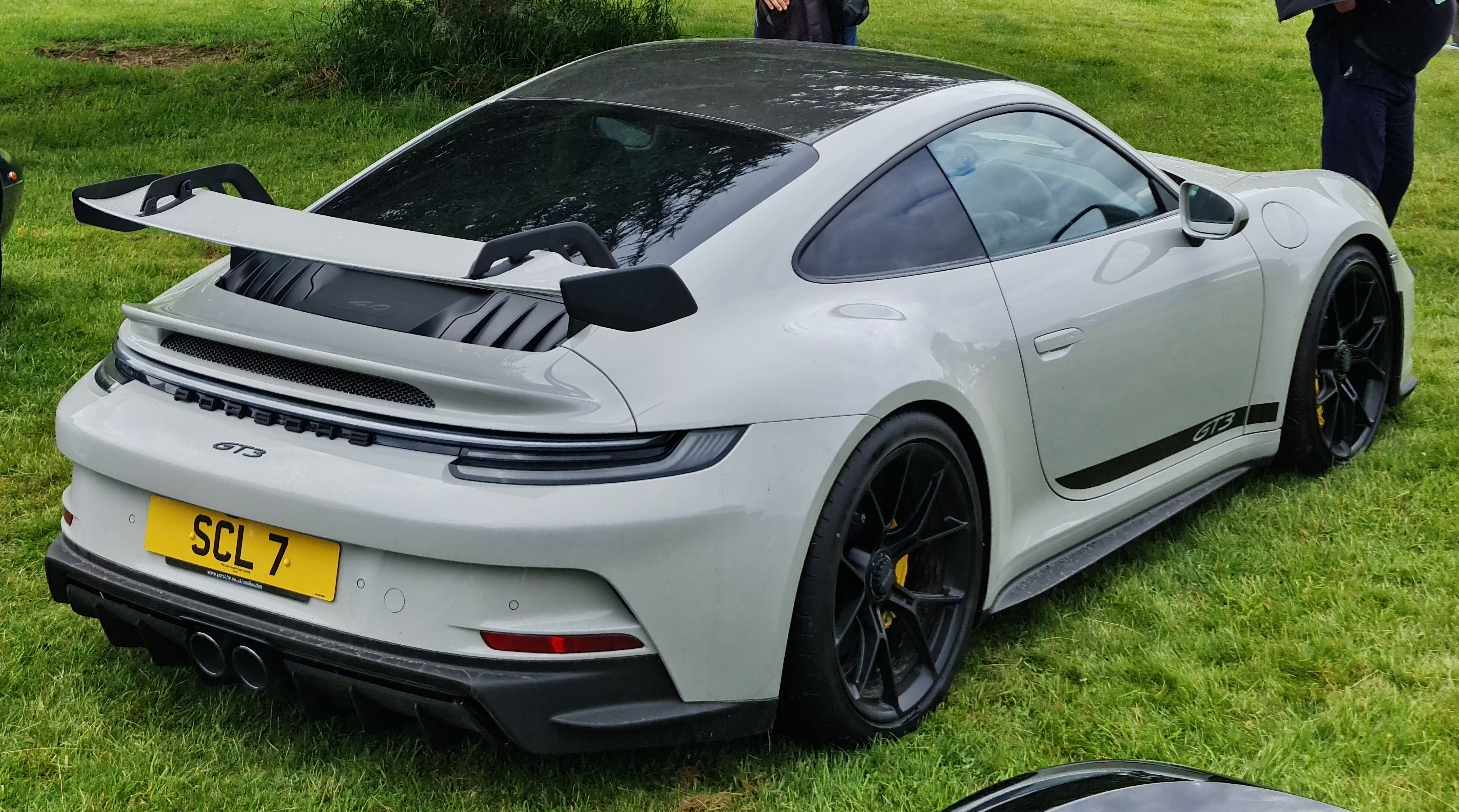
Use the current carbon fiber spoilers and wings category to discover available styles. This guide is about purchase questions and body compatibility, not a claim that every spoiler shown in a broad search is suitable for every 911.
Choose the component by vehicle-specific geometry, mounting and construction rather than styling terminology alone. Confirm exact year, generation, body style and factory equipment. A carbon surface does not, by itself, prove aerodynamic performance.
A lip spoiler adds a modest trailing-edge line and is generally chosen for an OEM+ appearance. A ducktail rises more gradually from the rear deck and changes the profile of the entire rear. A pedestal wing uses separate supports and an aero profile; its mounting and aerodynamic considerations are substantially different.
A glossy weave will not make an oversized part appear integrated. View the car from side profile and three-quarter rear before deciding which design supports its existing bumper, wheel and ride-height combination.
The 997 generation includes derivatives with different rear equipment. Check coupe or cabriolet, exact year, deck-lid design and any factory aero option. An item pictured on a GT3 cannot be assumed to fit a Carrera deck without modification.
If the part overlays an existing moving spoiler, request an explicit compatibility statement and installation instructions. Avoid vague descriptions such as “all 997 models” unless backed by engineering or vehicle-specific fitment details.
The 991 and 992 have different rear styling and packaging. Even within a generation, base, GTS, Turbo and GT variants can have different aero structures. A wing designed around a fixed GT application is not automatically transferable to a model with active hardware.
When comparing listings, prioritize exact generation, pre-facelift/facelift distinction where relevant, body style, existing factory wing and actual rear-panel mounting photographs. These details are more useful than the seller’s styling name.
Some 911 variants use actively controlled rear aero. A replacement part may preserve, cover, relocate or delete that system. Only proceed with a manufacturer-documented solution that addresses the mechanical operation and relevant electronic systems.
A simple cosmetic overlay can also interfere with deployment, sealing or access. Never assume a static photo taken with the mechanism retracted proves clearance through the full movement range.
A spoiler receives direct light across a long horizontal surface. Wavy reflections and asymmetric twill become obvious. Request daylight photos of the installed part from directly behind and at eye-level three-quarter angles. Check the leading-edge thickness where it meets painted metal.
A modest spoiler paired with a compatible rear diffuser can produce a cohesive rear view. The aerodynamic principles guide separates tested performance from visual styling and explains why rear-only changes should be considered carefully.
| Style | Visual character | Compatibility priority |
|---|---|---|
| Low-profile lip | Subtle OEM+ | Deck edge curvature and bond area |
| Ducktail | Integrated raised rear | Correct lid shape and opening clearance |
| Pedestal wing | Track-inspired | Load path and factory aero systems |
Before payment, retain the seller’s current fitment statement, included-components list and installation instructions. A marketplace listing is not a substitute for the part manufacturer’s technical documentation.
Do not assume so. The rear body and lid geometry differ.
Appearance alone is not fitment proof; check model-specific support and hardware.
Only when a product explicitly supports the original mechanism.
Savings depend on the replaced component and the new part’s full construction, including brackets.
For substantial functional rear aero, front/rear balance should be evaluated as a system.
Accurate lid curvature, full contact footprint and the manufacturer’s approved bonding procedure.
Choose the design that fits the actual 911 generation and factory equipment. For product discovery, see carbon fiber spoilers and wings rather than relying on mixed-model search titles.
Start by recording the generation, body variant, original rear deck arrangement and any active rear-spoiler hardware. A 997, 991 and 992 can all carry a ducktail-style silhouette, but that does not make their mounting areas interchangeable. A matching paint color or similar rear photo is not fitment evidence.
Ask for an underside image showing every mounting flange, hole, clip and gasket. If the new part changes the engine cover or spoiler assembly, confirm the effect on water management, heat exhaust and service access. Original controls or warning behavior must not be bypassed without a documented compatible conversion.
A low-profile lip can preserve the original deck appearance; a ducktail changes the profile more visibly; a supported wing requires particular attention to structure and mounting. If the car is driven on track, treat aerodynamic claims as testable engineering data and consider the entire vehicle balance, not only the rear piece.
When browsing carbon finishes, compare gloss under natural daylight and ask for a close-up of the underside return. A heavily coated cosmetic skin and a structurally designed CFRP assembly can both look like carbon in the seller’s hero photo. The construction description is what should differentiate them.
For selection and installation fundamentals, compare our carbon spoiler installation guide. When weighing a spoiler against adjacent rear trim, use carbon fiber rear diffusers as a separate comparison.
The carbon fiber spoilers and wings catalog is the category hub for this series. Each companion article answers a different installation or model-specific question:
For material and surface inspection, read how to judge carbon fiber quality. For a consistent exterior scheme, compare carbon front lips and splitters, carbon side skirts and carbon rear diffusers.
No. Generation names alone do not describe compatible deck lids, hinges, latches or active-aero mechanisms.
No. Verify the approved treatment of any factory moving spoiler and related warning system for the specific conversion.
Browse compatible parts: carbon fiber spoilers, ducktail lips and rear wings. Compare the vehicle and exact installation requirements before ordering.
Oct 03, 2026 by Lux Carbon
Oct 03, 2026 by Lux Carbon
Cookie preferences